總網頁瀏覽量

2016年6月5日 星期日

2016 AJKD--Continuous Dialysis Therapies Core Curriculum 2016--CRRT principle

2016 AJKD--Continuous Dialysis Therapies Core Curriculum 2016--CRRT principle

  1. Studies designed to compare continuous versus intermittent therapies have not shown a beneficial effect on mortality
  2. With greater hemodynamic stability and a higher likelihood of kidney recovery compared to standard iHD
  3. Lack of consensus on several aspects of RRT (eg, timing of initiation, dose, session lenth, and standards for monitoring.
===================================================================
  1. Solute transport
    1. convection, diffusion, and adsorption, and replenishing depleted solutes
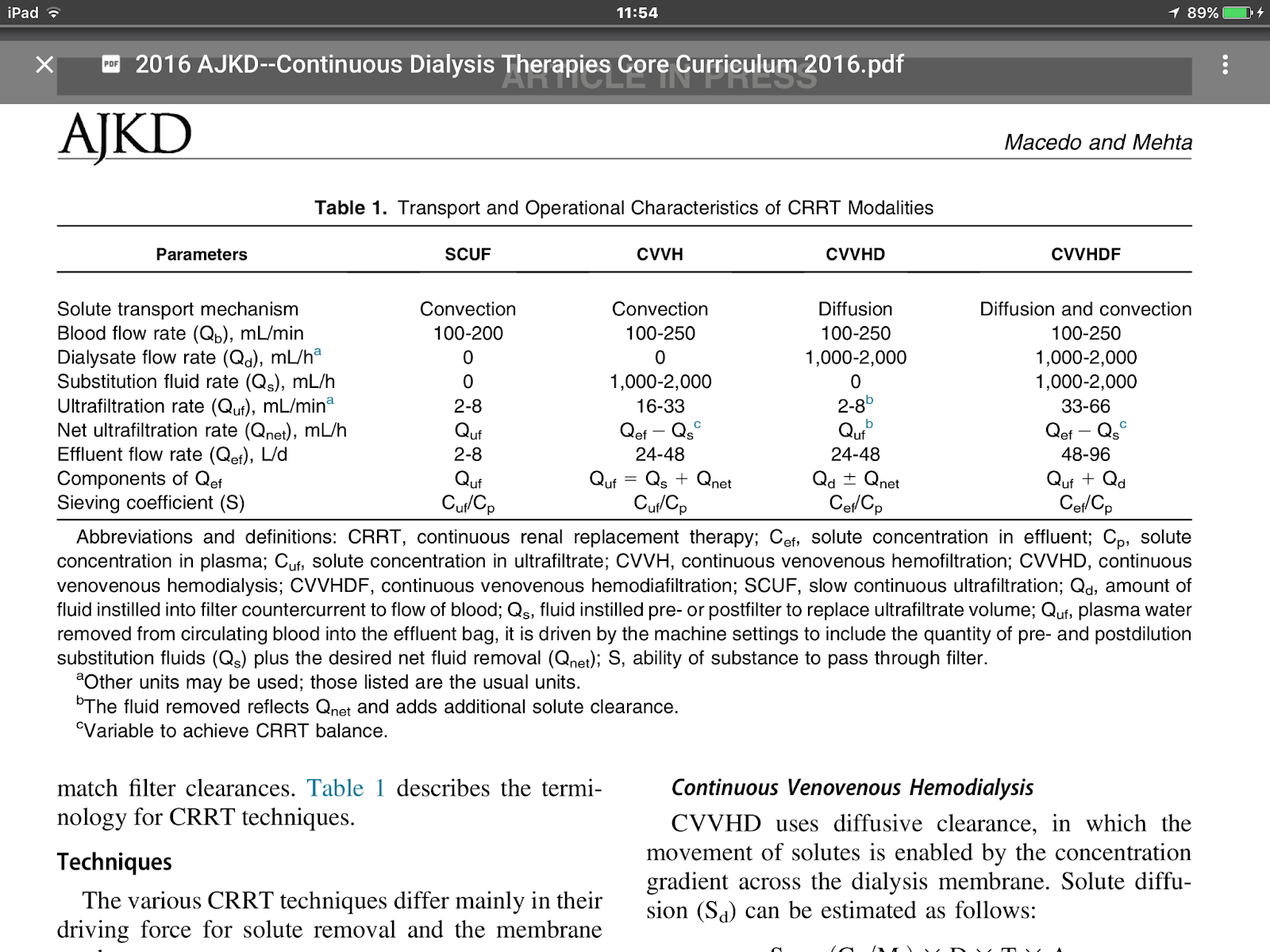
  2. CVVH, relies solely on convection; CVVHD, CVVHDF, SCUF
IMG_0787.png
  1. These mechanisms can by manipulated by the type of membrane and blood and fluid flow rates to selectively influence solute clearances of moledules of different size.
Adsorption of solutes occurs to varying degrees in all CRRT circuits and can be a contributor for large molecule removal, depending on membrane characteristics.
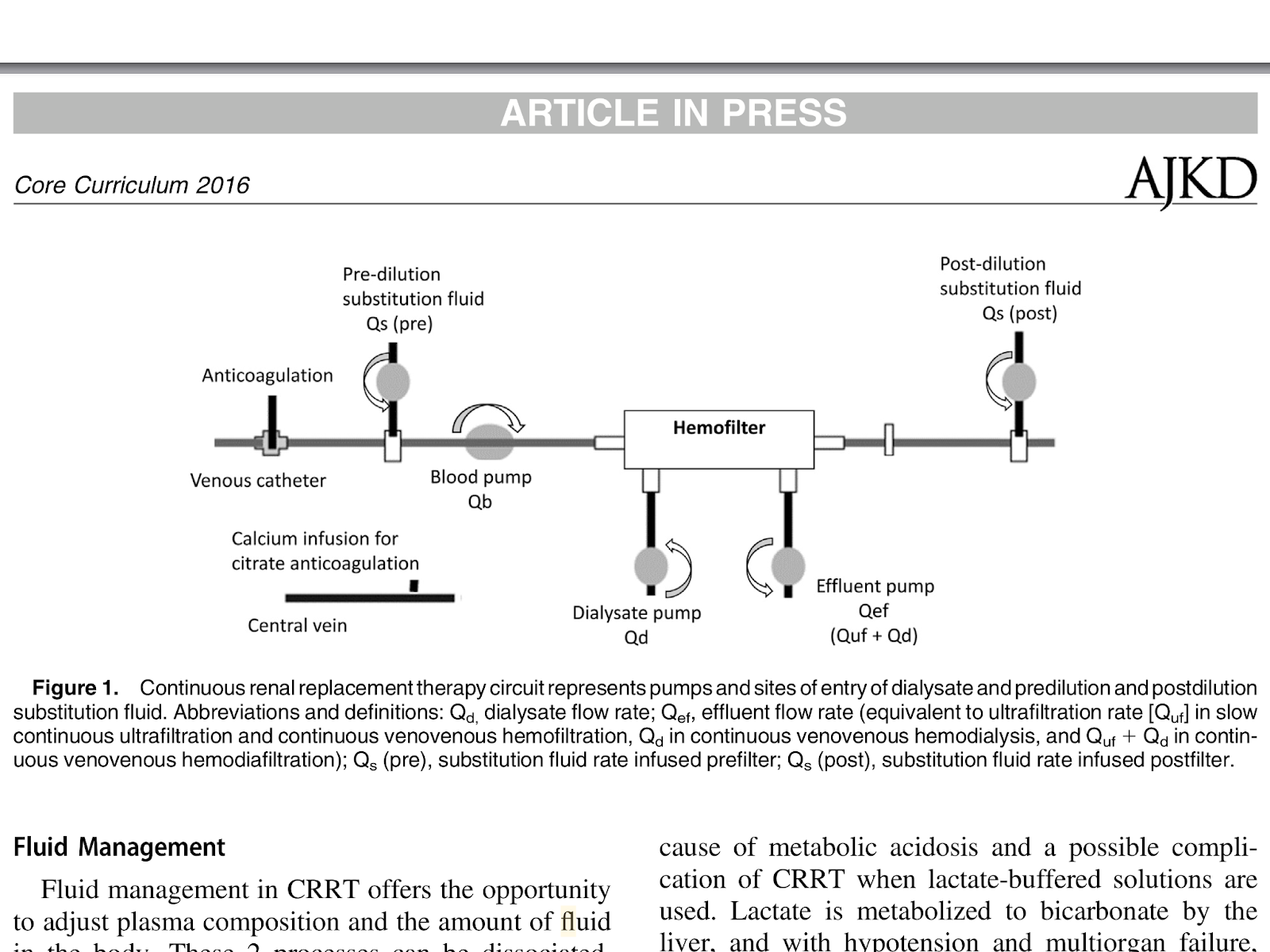
  1. Effluent flow rate (Qef) is the final result of the filtration process and is composed of the net ultrafiltration (Qnet) + substitution fluid rate (Qs) in CVVH and CVVHDF + dialysate flow rate in CVVHD and CVVHDF.
=> CVVH and CVVHDF: Qef = Qnet + Qs
=> CVVHD and CVVHDF: Qef = Qnet + Qs + dialysate flow rate (????)
  • Filter clearance for most CRRT = Qef * S
  • S: sieving coefficient = Cuf / Cp, regulated by reflection coefficient of membranes
  • reflection coefficient of memebranes => S = 1 - σ, S = 1, solute freely passes through membrane; S = 0, solute cannot freely pass through membrane
  • For middle molecules: clearance depends on [membrane permeability] * UF volume
  • For adsorption: overall blood clearance can be grater than filter clearance, even when S is low => blood-side clearances will not match filter clearances
IMG_0788.png
  1. Techniques: differ in [various driving force for solute removal] and [membrane use]
    1. CVVH: via convection, driven by TMP:
      1. Uf  = Kf * TMP,
        1. Kf = coefficient of hydraulic permeability, and
        2. TMP = (Pb - Puf) - 𝝿, Pb = blood hydrostatic pressure; Puf = UF/dialysate hydrostatic pressure, 𝝿 = plasma proteins oncotic pressure
      2. Cx = Quf * S, Cx: convection clearance, S: sieving characteristics of membane = Cuf/Cp
      3. Qnet = UF - substitution fluid infusion
    2. CVVHD: vis diffusive clearance, by solute concentration gradient acrosss the dialysis membrane
      1. Sd = (Cg / Mt ) * D * T * A
      2. Sd: solute diffusion, Cg: concentration gradient, Mt = membrane thickness, D = diffusion coefficient of the solute, T = solution temperature, A = membrane surface area
      3. gradient across membranes: Qd、Qb; Qd is the rate limiting factor for solute removal => Qd 0.5~3 L/h (8~50 mL/min) vs. Qb 100~200 mL/min
    3. CVVHDF: via diffusion + convective technique => dialysate + substitution sol.
      1. removal of small + middle molecules
    4. Slow continuous ultrafiltration (SCUF): use exclusively the principle of UF w/o substitution. => safely treat fluid overload
      1. solute removal is minimal because it is limited by total UF volume
  2. CRRT: plasma composition + fluid amout in the body => 分開處理
Substitiuion fluid:
螢幕快照 2016-06-05 下午1.33.06.png
  1. Citrate is used as an anticoagulant => provides a buffer base cecause each citrate colecule is metabolized in the liver and muscle to 3 molecules of bicarbonate
=> but  may leads to markedly hypotensiion

  1. CRRT’s key feature is the flexibility in maintaining a specific level of any electrolyte and calibrating the rate of correction to accommodate the clinical need
  2. The technique to achieve fluid management:
    1. Most common: vary Qnet to meet the anticipated fluid balance needs over 8~24 hours:
      1. Effluent vol + solute clearance => vary with each adjustment in net ultrafiltration
    2. To keep a fixed rate of UF exceeds the hourly intake from all sources and to vary the amount of post-dilution substitution fuid administered:
      1. ensures a constant effluent volumen and solute clearance level.
      2. Post-dilution fluid can be given outside the CRRT circuit through a peripheral IV line.
    3. Third method: fluid valance is tailored to achieve a targeted hemodynamic parameter every hour.
      1. such as: CVP, MAP, PAWP, etc.
2016年6月4日 星期六

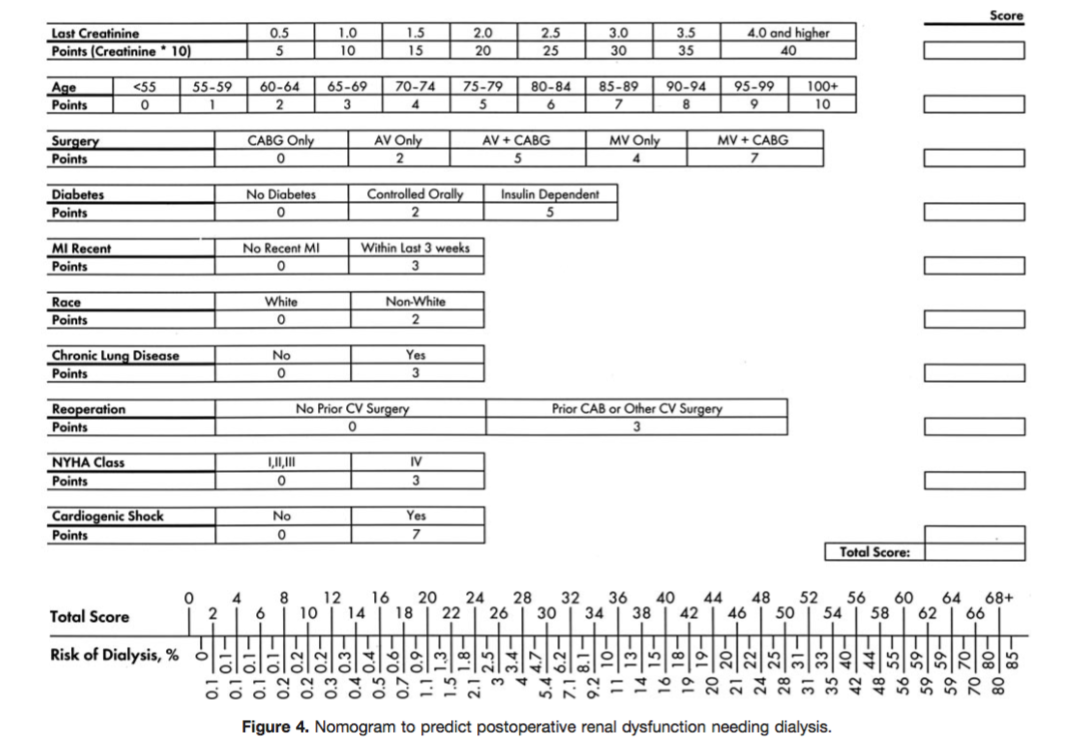
2006 Circulation--Bedside Tool for Predicting the Risk of Postoperative Dialysis in Patients Undergoing Cardiac Surgery

2006 Circulation--Bedside Tool for Predicting the Risk of Postoperative Dialysis in Patients Undergoing Cardiac Surgery

臨床上可以用這個指標去評估病人post operation mortality
螢幕快照 2016-06-04 下午11.18.48.png

以下為結論的評分表:

螢幕快照 2016-06-04 下午11.19.04.png

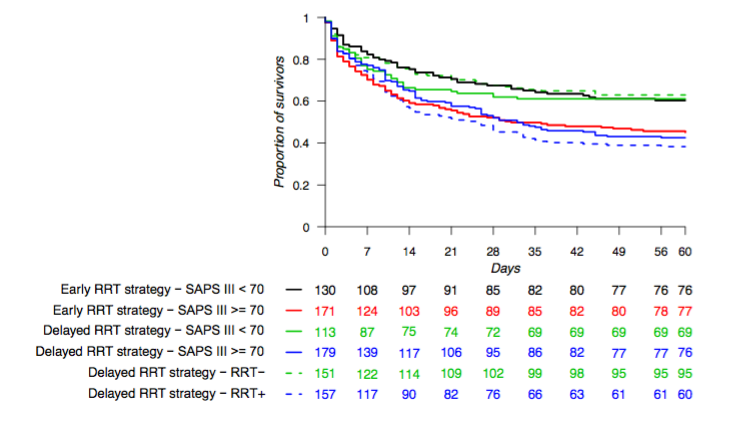
SAPS III

AKIKI有用一個scoring system: SAPS III 
查了一下,似乎是比較新的(2003以後出來的)
based on SAPS II的基礎去做出的一個指標
http://www.saps3.org/news/ 
這是它的官方網站
似乎是蠻複雜的參數

有時間應該要好好看它怎麼評估病人

下面這個是1994年SAPS II

2004年發表的SAPS III

HAART failure definition

Washington maunual, 35/e, chap. 16
HAART failure definition:
  1. less than a log (10-fold) reduction of the viral load 4-6 weeks after starting a new ART
  2. failure to reach an undetectable viral load after 6 months of Tx
  3. detection of the virus after initial complete suppression of viral load => possible resistant
  4. persistent decline of CD4 cell count or clinical deterioration

4-6 weeks after initiation of ART => viral load and CD4 count
Q3-6M regular follow under stable medication control

PI and cobicistat both inhibit andinduce the P450 system => macrolides, antifungals, rifamycins, anticonvulsants; antihistamines, antiarrhthmic (flecainide, encainide, quinidine), fentanyl, meperidine, midazolam, warfarin, statin (pravastatin is the safest), oral contraceptives

2016年6月3日 星期五

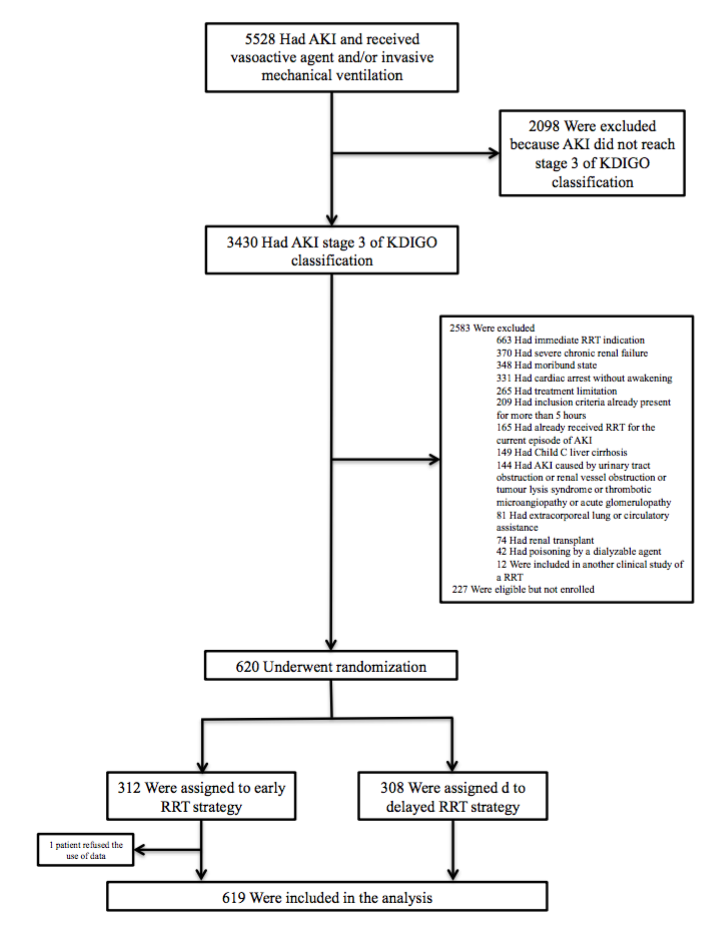
2016 NEJM--Initiation Strategies for Renal-Replacement Therapy in the Intensive Care Unit

2016 NEJM--Initiation Strategies for Renal-Replacement Therapy in the Intensive Care Unit

Purpose:
The best timing for RRT in ICU patients with AKI is unknown.
Despite progress in RRT management, mortality remains high and the timing of its initiation remains open to debate when no metabolic disorder (severe hyperkalemia or metabolic acidosis) or major fluid overload threaten short term prognosis. Such abnormalities mandate RRT and are non-inclusion criteria of our study.
=> whether duration of oliguria/anuria and /or value of serum urea/creatinine are an adequate indications for RRT is unknown.

Hypothesis:
“Delayed” strategy would prove beneficial to the patients and would translate into increased survival.
=> This study is designed to prove superiority (and not noninferiority) of this strategy over the “early” one.

Objective:
Main objective to compare two strategies of RRT initiation in terms of overall survival in ICU patients (mechanically ventilated and/or receiving catecholamine infusion) with severe AKI defined as RIFLE F classification.

Early strategy
Delayed strategy
RRT immediately when a RIFLE F status is documented
RRT in patient with RIFLE F only in case of occurrence of one or more of the follow events (“Alert Criteria”):
  1. oliguria or anuria for more than 72 hours after randomization
  2. SUN > 40mmol/L (112 g/dL)
  3. Serum K > 6 mmol/L,
  4. Serum K > 5.5 mmol/L that persists despite well-conducted medical treatment with at least NoHCO3 and/or glucose/insulin infusion
  5. ABG pH < 7.15: pure metabolic acidosis, (PaCO2<35)
  6. ABG pH < 7.15: mixed acidosis w/ PaCO2>50 w/o possibility of lowering PaCO2 value
  7. Acute overload pulmonary edema => severe hypoxemia requiring O2 flow > 5L/min in spontaenously breathing patients despite diuretic use
  8. Acute overload pulmonary edema in patient ventilated (w/ invasive or noninvasive) with > FiO2 > 50%
Design: Prospective, multicenter, randomized, open-label trial comparing two RRT initiation strategies in terms of overall survival

Primary endpoint:
Overall survival, measured from the date of randomization to the date of death, regardless of the cause. Minimun duration: 60-day follow-up

Secondary endopoints:
  1. survival rate at D28
  2. % of patients requireing who did not require RRT in the delayed strategy
  3. timie unitl cessation of RRT therapy
  4. Rate of adverse events potentially related to the AKI or to RRT (eg; RRT catheter related complicates, hemorrhage due to anticoagulation required for RRT etc…)
  5. rate of nosocomial infections
  6. # of vetilator free days of RRT free days and of vasopressors free days
  7. length of stay in ICU and hospital
  8. rate of limitations of treatment for futiligy
  9. total cost of connsumables (including RRT catheters and lines among others) related to RRT between D1 and D28

Inclusion criteria:
  1. ICU patients
  2. Age > = 18 years
  3. AKI compatible with the dx of ATN defined by clinical ischemic or toxi insult
  4. AKI, with RIFLE F classification: (one of the following 3)
    1. Creatinine > 354 mmol/L (4mg/dL) or > 3 times the baseline
    2. anuria for more than 12 hours
    3. oliguria defined as U/O < 0.3ml/kg/hr or 500ml/d for more than 24 hours
  5. Mechanical ventilation and/or catecholamines infusion (noradrenaline or/and adrenaline)
Non-inclusion criteria:
  1. CKD (defined as creatinine clearance < 30ml/min)
  2. Patients already enrolled in the study
  3. Inclusion criteria #4 present for more than 5 hours
  4. AKI due to
    1. urinary tract obstruction
    2. renal vessels obstruciton
    3. tumor lysis syndrome
    4. thrombotic microangiopathy
    5. acute GN
  5. Intoxication with a dialyzable product
  6. Child-Pugh class C liver cirrhosis
  7. Renal transplant
  8. Cardiac arrest without awakening at time of potential inclusion
  9. Moribund state
  10. decision to limit treatment
  11. RRT already started for the current episode of AK
  12. Presenting (at time of potential inclusion) a strong indication for immediate RRT
    1. oligoanuria for more than 3 days
    2. Alert criteria
  13. Under cardiopulmonary bypass
  14. Included in another clinical trial on RRT modalities

螢幕快照 2016-06-01 下午10.49.09.png
螢幕快照 2016-06-01 下午10.57.07.png

Result:
  1. early group:
  2. Late group: 157 receiving RRT ⇔ 101 w/o RRT, and the number in the late group with RRT are below:
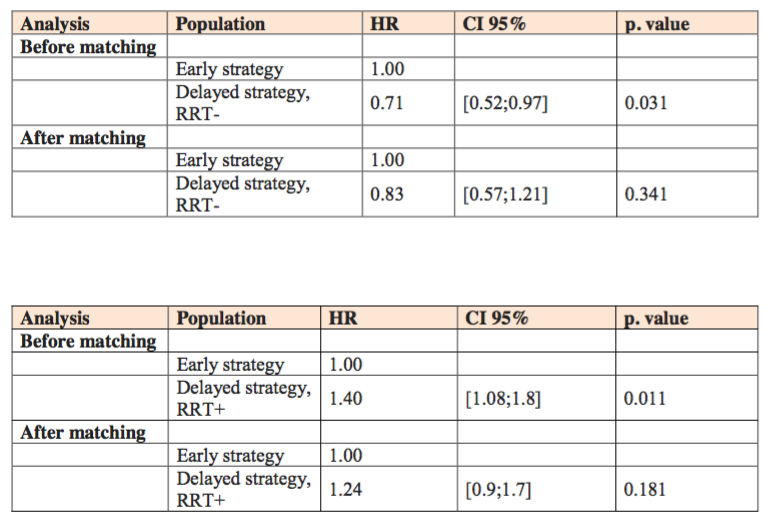
螢幕快照 2016-06-02 下午10.46.04.png
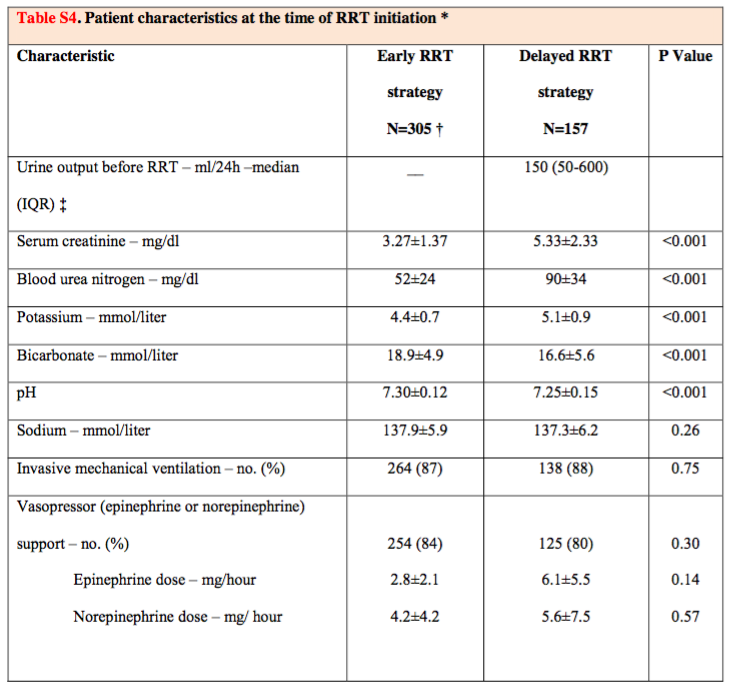
  1. The patients’ condition at the timing of RRT initiation:
螢幕快照 2016-06-02 下午10.48.02.png
Metabolic abnormalities were more marked in the delayed strategy group than in the early strategy

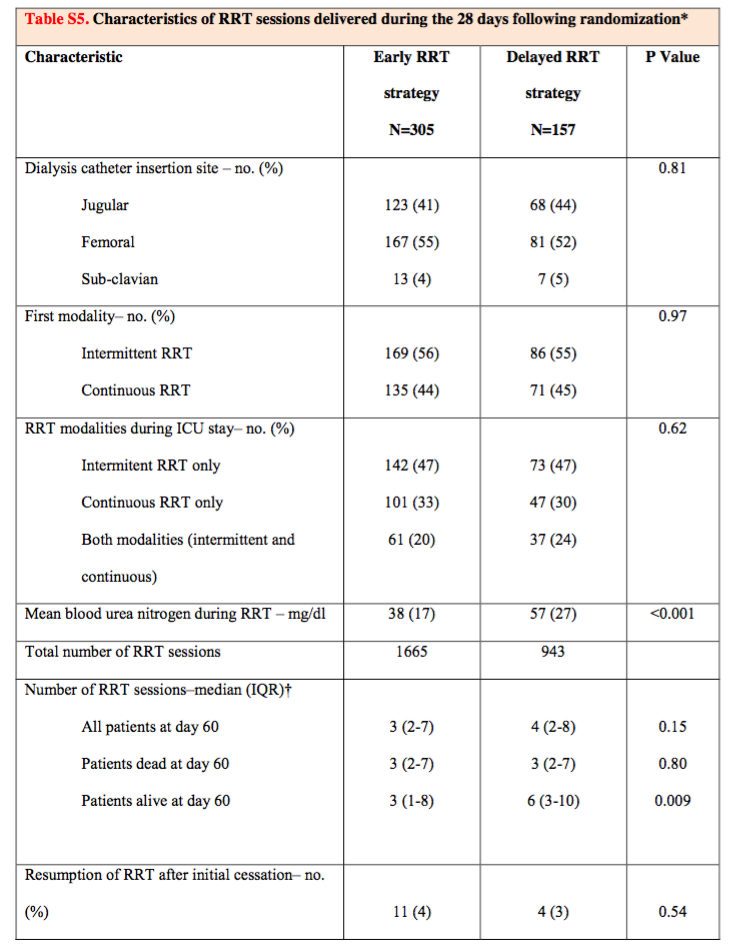
  1. Whether there is different modality or condition between the two group?
螢幕快照 2016-06-02 下午10.54.04.png


Early group
Late
deaths at day 60
150
153
mortality at Kaplan-Meier
48.5%
49.7%
overall mortality at D60
49.1%

  1. Post hoc exploratory analysis

Early
Late - RRT
Late + RRT
D60 Mortality
48.5%
37.1%
61.8%
Baseline severity SOFA (Med)
11
10
12
Adjustment for severity
non-significant
螢幕快照 2016-06-03 上午7.01.29.png螢幕快照 2016-06-03 上午7.01.41.png
The # of days free from RRT
lower  (17)
higher (19)
CRBSI
higher (10%)
lower (5%)
Hypophosphatemia
higher (22%)
lower (25%)
Hemorrhage of other etiologies
(other than GIB or dialysis catheter)
lower (0.3%)
higher (4%)
Adequate diuresis w/o RRT

Earlier
螢幕快照 2016-06-03 上午9.31.51.png

Discussion
  1. No survival benefit was observed with the delayed strategy of RRT
    1. The recovery of renal function, as marked by diuresis, was more rapid and catheter relted infections occurred less frequently in the delyaed-strategy group than in the early-strategy group
  2. Lengths of stay in the ICU and in the hospital were similar in the two groups
    1. Allowing time for renal funciton recovery did not lead to prolongation of the stay in the ICU
  3. This study is not generalizale => > 50% iHD first + only 30% CRRT alone

Limitations:
  1. The power of the study to distriguish a significant difference in mortality could be questioned
  2. Not using Kt/V to evaluate the dose of RRT => However, the study keep serum urea low during therapy
  3. The study group is “advanced” AKI => may not be generalizable to patients with different KDIGO stages of AKI
  4. 有些人可能會把這個研究在接受Late-strategy這組的高致死率詮譯作一個”late strategy”有害的效果 (deleterious effect)。然而,在接受到”late RRT"的這組病人(比起不是接受”late RRT”的那一組)明顯有比較差的疾病狀況;並且進一步地對疾病嚴重程度加以校正來看的話,會發現所觀察到的crude difference是受到干擾的(was confounded)。
" Our study should not be interpreted as suggesting that a “”wait and see” approach is safe for all patients.” => Careful surveillance is mandatory when deciding to delay RRT in patients wi severe AKI….

Conclusion:

No significant difference in mortality with a strategy of delayed initiation as compared with early initiation of RRT.

2016年6月2日 星期四

Hepatojugular reflux and Kussmaul sign

Hepatojugular reflux and Kussmaul sign
DeGowin's Diagnostic Examination, 9/e, p.387

These phenomena are caused by inability of the right heart to accommodate increased venous return.

Position the patient so the blood column is just visible in the jugular veins above the clavicle.
With the patient breathin normally, place the right hand on the right upper abdominal quadrant and press firmly upward under the costal margin for at least 10-15 seconds.

The hepatojugular reflux sign is present if the top of the jugular venous column in the neck rises and persists as long as the abdominal pressure is continued.

Kussmaul sign is present when the jugular venous column fails to collapse during inspiration due to increased intraabdominal pressure created by the diaphragm during inspiration.

The hepatojugular reflux sign is most commonly seen with eearly right heart fialure.

Both signs may be seen with severe right heart failure, constrictive pericarditis, and right ventricular infarction.